Stamped vs. Plain Concrete: Which Is Right for Your Project?
Stamped concrete offers the look of stone, brick, or slate at a fraction of the cost. But it's not the right choice for every project. Here's a straightforward breakdown to help you decide.
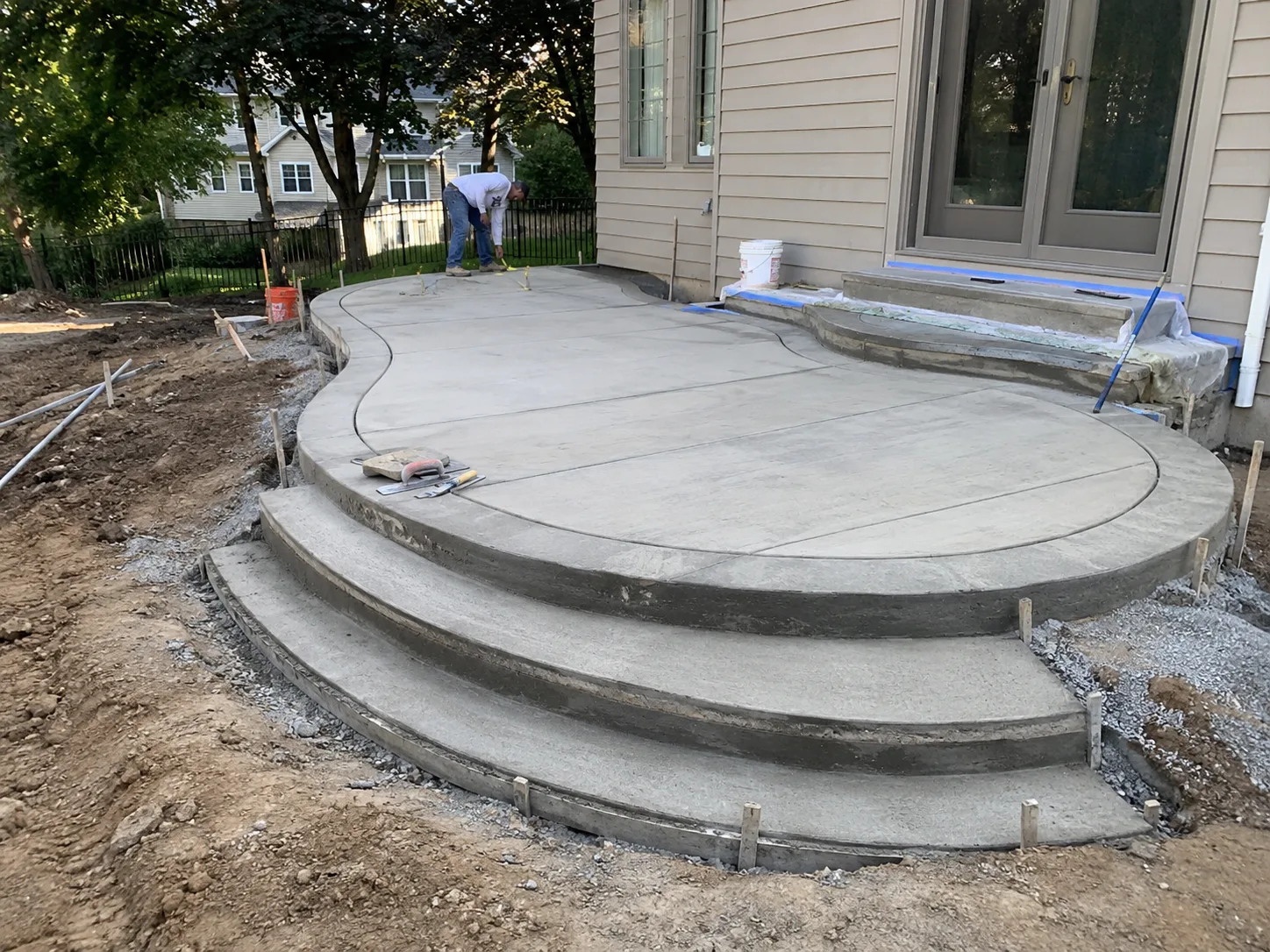
When you're planning a driveway, patio, or walkway, one of the first questions that comes up is whether to go with plain concrete or stamped concrete. Both are durable, long-lasting choices — but they have very different price points, maintenance requirements, and ideal use cases. Here's what you need to know before making a decision.
What Is Stamped Concrete?
Stamped concrete (also called textured or imprinted concrete) is regular concrete that's given a decorative pattern before it hardens. Contractors use large rubber stamps to press patterns into the wet surface, mimicking the look of natural stone, brick, slate, cobblestone, wood planks, and more. Color is added via integral color (mixed into the concrete) or surface-applied color hardener, along with an antiquing release agent that adds depth and contrast.
When done well, stamped concrete is genuinely impressive. From a distance — and even up close — it's hard to tell it apart from natural pavers or stone. And it costs significantly less than real stone or brick.
Plain Concrete: The Case for Simplicity
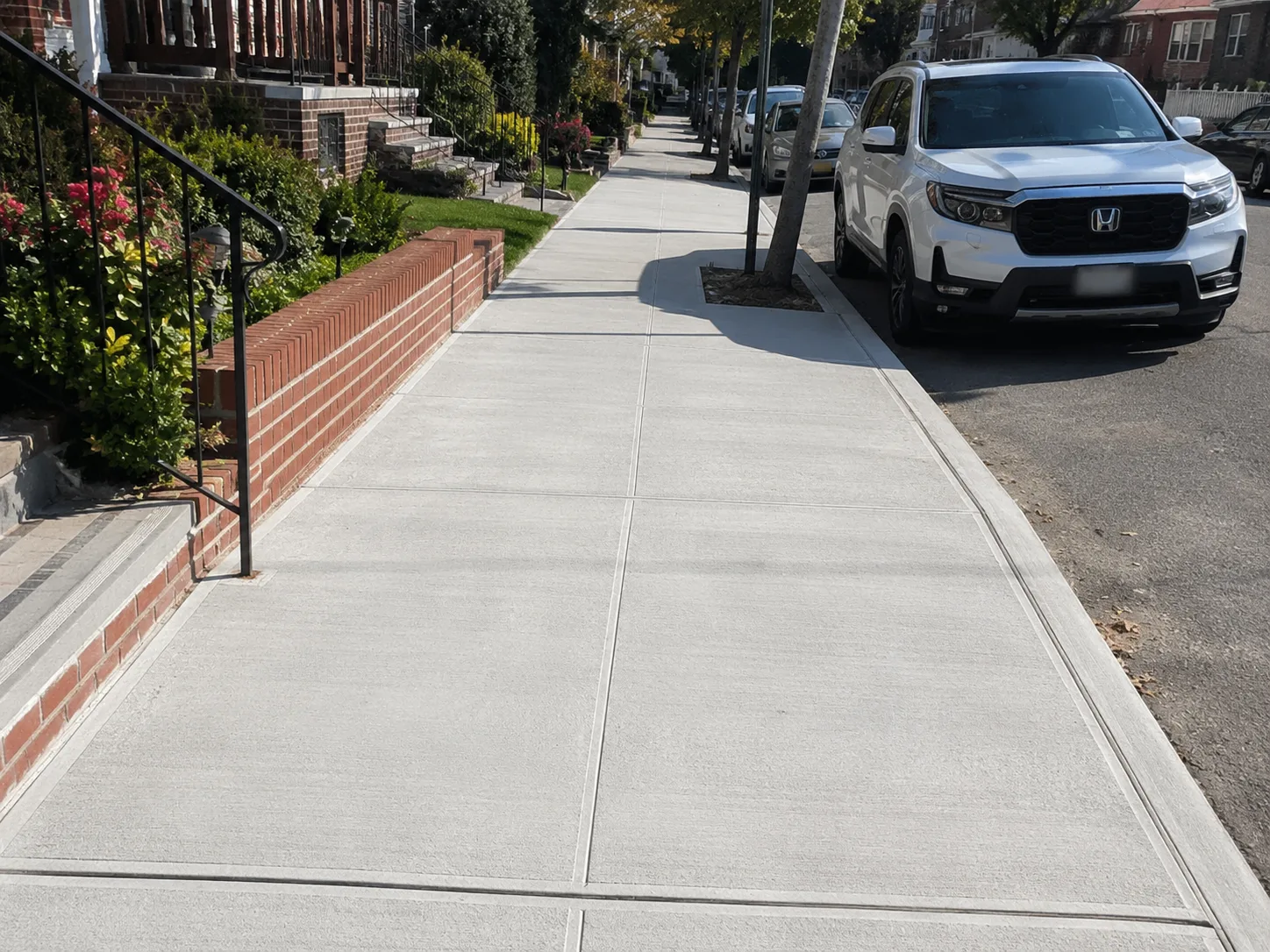
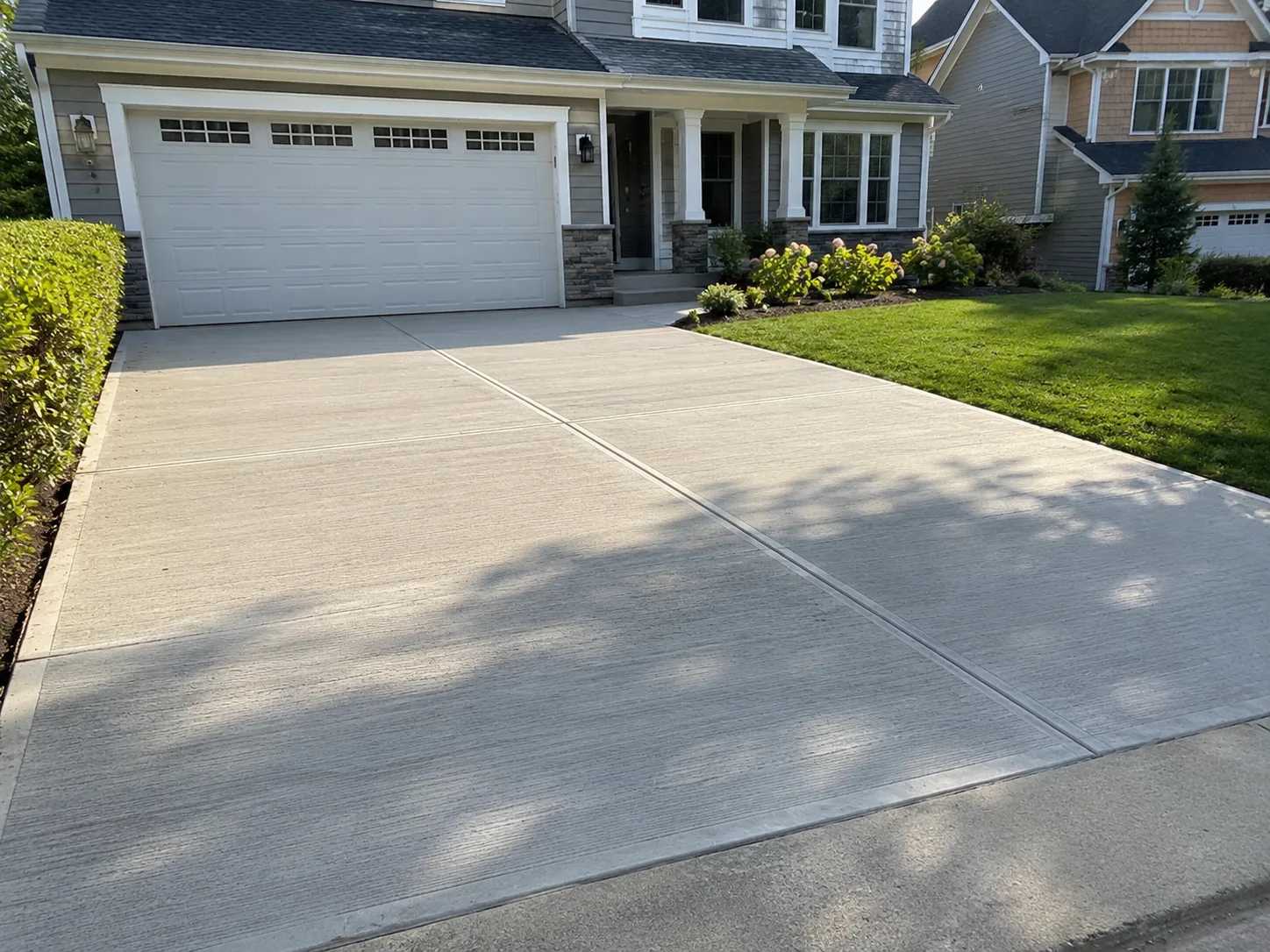
Plain broom-finished concrete is the workhorse of residential and commercial construction. It's clean, functional, and extremely durable. The broom finish (dragging a broom across the surface before it cures) gives it a texture that provides traction without looking rough. A well-installed plain concrete driveway or patio can last 30–50 years with minimal maintenance.
Plain concrete is also more forgiving when repairs are needed. Patching or resurfacing plain concrete is much simpler than trying to match the color and pattern of stamped work.
Cost Comparison
Plain concrete typically costs $6–$10 per square foot installed in the New York area. Stamped concrete runs $12–$20+ per square foot, depending on the complexity of the pattern and the number of colors involved. Multi-color, intricate patterns at the high end can approach $25 per square foot.
That said, when you compare stamped concrete to real bluestone, brick pavers, or natural fieldstone, the math often still favors concrete significantly — especially for larger areas like driveways.
Maintenance Differences
This is where plain concrete has a real advantage. Plain concrete needs sealing every few years and occasional crack repairs. Stamped concrete needs all of that plus more frequent resealing (every 1–3 years vs. every 3–5 for plain) because the sealer is what protects the color and the surface texture. If stamped concrete fades or the sealer wears off and water gets in, the color can become uneven and difficult to restore.
In high-traffic areas or climates with harsh winters — like New York — this is an important consideration. Salt and freeze-thaw cycles are harder on stamped surfaces than plain ones.
Which Should You Choose?
Choose plain concrete if: you want maximum durability with minimum maintenance, you're working with a tighter budget, the area gets heavy vehicle traffic or sees a lot of winter salt use, or you prefer a clean, architectural look.
Choose stamped concrete if: aesthetics are a priority, the area is a patio or light-traffic walkway, you want a decorative look without the cost of natural stone, and you're committed to proper sealing and maintenance.
The most popular stamped applications we do at Precision Concrete are patios, pool surrounds, and front walkways — areas where curb appeal matters and traffic is lighter. For driveways, many clients choose plain concrete for the main field and add a decorative stamped border for a best-of-both-worlds result.
Not sure which is right for your property? Give us a call. We've done thousands of square feet of both across New York, and we're happy to walk you through the options for your specific project.